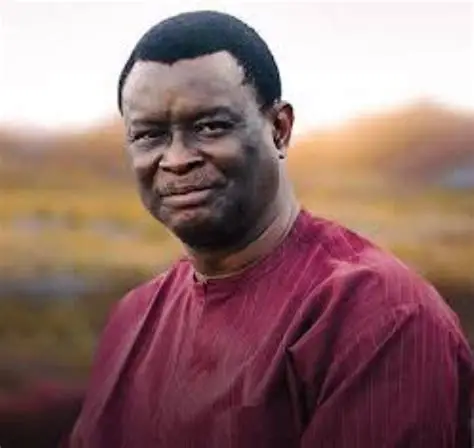
Famous gospel filmmaker, actor, and founder of Mount Zion Faith Ministries, Mike Bamiloye, on Thursday took a swipe at federal lawmakers over the proposed law seeking to penalise gospel preaching inside commercial buses, charging them to instead focus on addressing more pressing challenges facing the country.
In a statement shared on his Facebook page, Bamiloye identified corruption, insecurity, kidnapping, poverty and Nigeria’s lingering electricity problem as deserving of greater legislative attention than an attempt to regulate public evangelism.
Newsmata.com.ng reports that Bamiloye’s reaction came on the heels of the passage of the Federal Road Safety Corps (FRSC) (Amendment) Bill, 2026, by the National Assembly.
The bill, which is awaiting presidential assent, proposed tougher penalties for several traffic-related offences, including a ₦50,000 fine for anyone caught hawking, trading or preaching inside commercial vehicles. It also seeks to increase penalties for a number of road traffic violations by as much as 300 per cent.
But querying why lawmakers would target gospel preaching when the country continued to grapple with corruption, violent crimes and deteriorating living conditions, Bamiloye argued that preaching in buses is aimed at encouraging people to abandon crime, immorality and other social vices, thereby contributing positively to society.
He wondered: “What has preaching in the bus got to do with the enormous pandemic of corruption and societal decay in Nigeria?”
The filmmaker argued that public officials continue to face allegations of diverting public funds while insecurity and economic hardship remain widespread across the country.
According to him, “There is massive embezzlement. Government officials are being accused of diverting public funds.
“We have heard of government officials owning estates with more than 100 duplexes. We have heard of public officers investing in several banks and acquiring properties in different countries with public funds.”
Cataloguing Nigeria’s unresolved security and economic problems, Bamiloye emphasised that these issues, which included the activities of bandits and terrorists, the proliferation of brothels and criminal hideouts, and the continued failure to provide stable electricity, needed urgent government’s intervention and should take priority over regulating religious activities in commercial buses.
He noted that “Bandits are killing many people. Many villages have been sacked by terrorists. The government has not been able to solve the nation’s energy and power problems,” while many communities still struggle to enjoy even six hours of uninterrupted electricity daily.
The popular film producer asserted that gospel preaching helps reform lives by encouraging people to reject drug abuse, violence and immoral behaviour, questioning why legislators would seek to penalise individuals who, in his view, are working to make society better.
“If preaching the gospel turns people from ungodliness to godliness, from immoral living to decent living, and from wickedness to humility, shouldn’t lawmakers be supporting such efforts instead of legislating against them?” he asked.
While submitting that those preaching in buses are helping to discourage criminality and social vices rather than contributing to them, Bamiloye chided the lawmakers, positing that “Some people are encouraging others to turn away from drugs, immorality and terrorism, yet the Nigerian legislators are making laws against it.”
The filmmaker concluded by urging lawmakers to redirect their attention towards addressing Nigeria’s deeper social and economic problems instead of focusing on public preaching.
“Preaching in buses is not Nigeria’s problem,” he declared.
“Corruption, insecurity, unemployment, poverty, terrorism, kidnapping and the declining moral condition of society are far more pressing national concerns.”