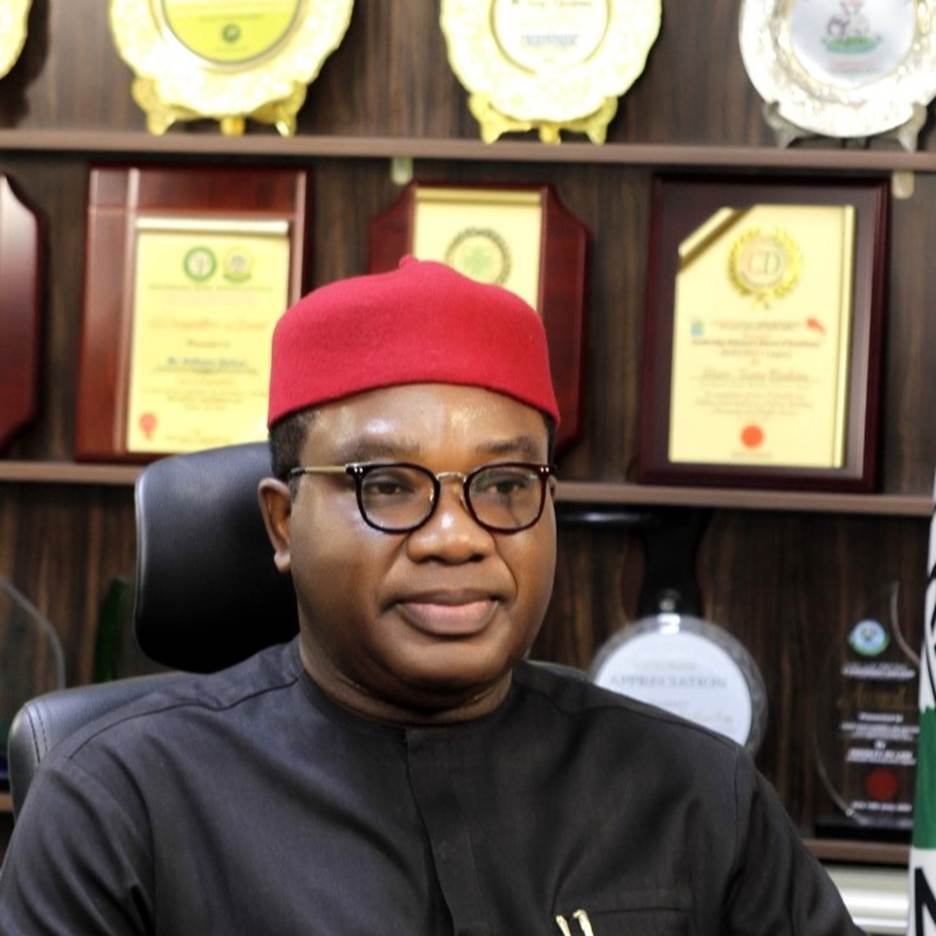
The National Human Rights Commission, (NHRC) says it would investigate the allegation by Mr. Peter Obi, presidential candidate of the National Democratic Congress (NDC) that his life was under threat, only if he complained directly to it.
Newsmata.com.ng reports that Obi, had in an interview, claimed that he might not be alive to contest the 2027 presidential election because the government of the day was determined to make sure he was not on the ballot.
Obi made the allegations during a chat Wednesday July 8, on With Chude, a podcast hosted by media personality Chude Jideonwo.
Responding to a question on whether there was a possibility he might not be a candidate in 2027, Obi said, “Not even a candidate. I might not even be alive. I’m telling you.
“Every single thing I do for a living, this government is frustrating it. Deliberately so! Everything. So, there is even a possibility, if they have the opportunity, I will not be alive.”
He, however, clarified that he was not making direct accusations but described daily experiences of obstruction.
But speaking on ARISE NEWS Prime Time interview programme with Charles Aniagolu on Friday night, the executive secretary of the NHRC, Tony Ojukwu, though described Obi’s allegation as “very worrisome” and one that should be taken seriously, he however dismissed it as a mere inference as he did not claim an attempt had been made on his life.
Noting that the former Anambra State governor had only complained to the public about the alleged threat, Ojukwu said the reaction would have been different if he had complained directly to his commission.
He said its immediate response to Obi’s public statement would be to issue an advisory urging the government and other political actors to ensure a conducive environment for all contestants.
According to Ojukwu, “When I got that news … I had to call my team to say what should be our response to this because, of course, the issue of the opposition being able to have space to do their bit is a legitimate right. And there is a general issue about freedom of information and civic space that is shrinking, especially as an election is coming close.
“So, the statement made by Peter Obi is a very worrisome statement, and for every person who means well for this country, we should take it seriously.
“We don’t have to wait until a formal complaint is lodged. So, what we want to do is we need to now issue an advisory, going forward, on what the government and everybody should do so that every contestant will have a feeling that they have the space to do their bit properly.”
He, however, noted that conducting a formal investigation into Obi’s allegations would require more specific details from him.
Ojukwu argued that “A statement of that magnitude does not automatically trigger an investigative reaction from the National Human Rights Commission. It is difficult to investigate a matter like this because he has made that statement, and you simply can’t turn around and put a gun to their heads. It’s difficult because we don’t also know if we invite Obi to come and give specifics of the allegation.
“He says his businesses are being attacked. He gave one example of his tyre being clamped at the airport and so on and so forth. However, what we intend to do is to give an advisory that going forward, please, all the contestants must be given the space.”
Pressed further on investigation Obi’s allegation given his pedigree, the NHRC boss said, “in a situation like this, he hasn’t complained to us. He has complained to every Nigerian.
“So, our approach to a case like this is we now issue an advisory, both for government and the players, on how to make sure that going forward, we have a free space for everybody to do his politicking without fear.”
“If he complains to us, we will do that… The level of reaction it will trigger is different if he complains directly to us. Now, he has made a general statement. It’s for us to say oh, is this part of shrinking civic space, allowing the opposition to feel free to go out and ask for voters and so on and so forth.
“The issue of being alive is a delicate issue; it’s an inference. He didn’t say an attempt had been made on his life. He says he’s not sure of being life.
“What we want to do is to issue the directive on how the civic space can be managed right now so that he doesn’t lose his life, so that he feels free to do his work, and at the end of the day, he will not lose his life.”
Acknowledging that Nigeria is witnessing a shrinking civic space, Ojukwu said the Commission’s monitoring dashboard showed that freedom of expression is increasingly under pressure.
He noted that the NHRC had issued advisories, opposed restrictive legislation, developed protocols for investigating attacks on journalists, and urged public officials to seek legal redress instead of using political power to silence critics.
“Of course, that is the picture we are seeing. If you look at our dashboard, that is the picture that is coming. And that is why we instituted this dashboard. Because the dashboard is an accountability mechanism to call out the people who are involved to take necessary action.
“The civic space, of course, the space was enlarged by social media, where everybody, on your laptop, on your telephone, you can publish. And you cannot – there’s no way you can regulate what people can publish.”