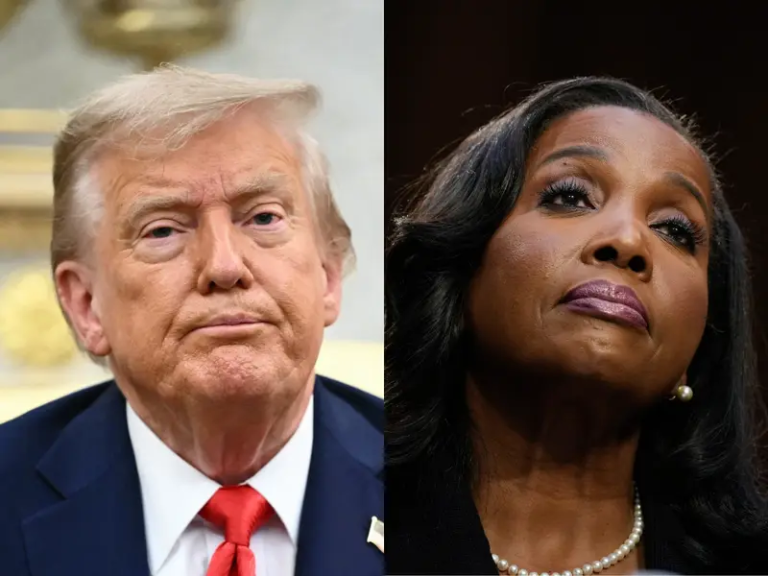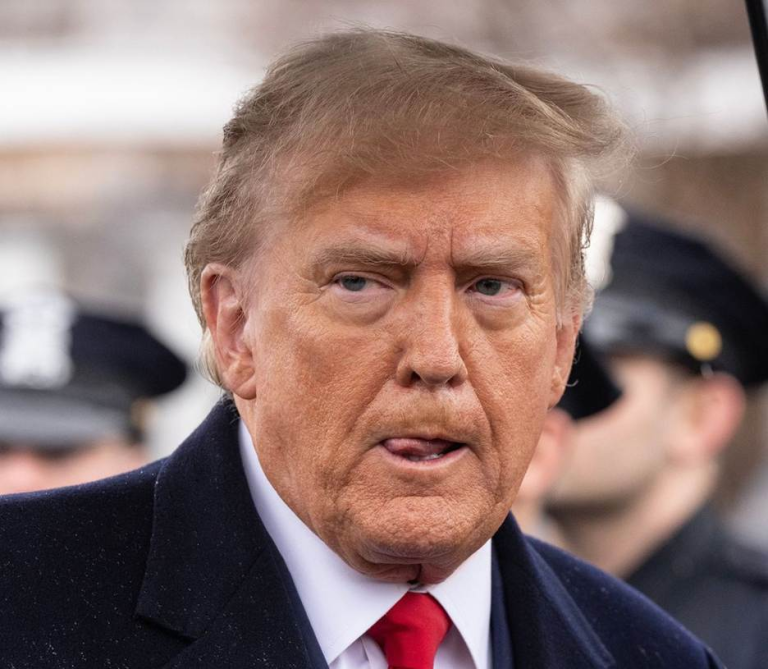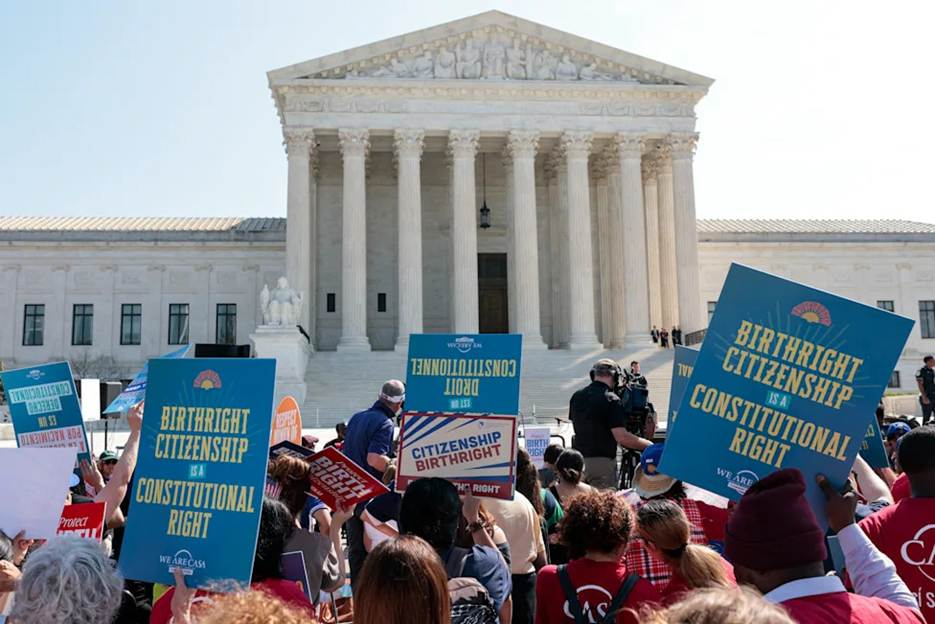
In a 6-3 decision, the United States Supreme Court on Tuesday rejected President Trump’s effort to end birthright citizenship, arguing that the 14th Amendment guarantees citizenship to “every free-born person in this land.”
The court ruled that Trump does not have the power to unilaterally overturn the long-standing constitutional principle that guarantees citizenship to all children born in the United States.
The 6-3 decision was the last one issued on the final day of the court’s term. Three conservatives — Chief Justice John Roberts and Justices Amy Coney Barrett and Brett Kavanaugh — joined liberal Justices Sonia Sotomayor, Elena Kagan and Ketanji Brown Jackson in denying Trump’s proposed limits.
Five of the justices in the majority held that the 14th Amendment, adopted after the Civil War, is settled law.
“Citizenship, then and now, was the right to have rights — to freely participate in our political community,” Roberts wrote in the 26-page majority opinion. “The Framers of the Fourteenth Amendment extended that promise to ‘every free-born person in this land.’ … We keep that promise today.”
In his own, separate opinion, Kavanaugh argued that Trump’s executive order attempting to limit the scope of birthright citizenship did not violate the 14th Amendment but was still invalid because it violated an existing federal statute. Under Kavanaugh’s reasoning, Congress could pass a new law that would make Trump’s order legal.
Justices Clarence Thomas, Neil Gorsuch and Samuel Alito dissented.
In his 91-page dissent, Thomas said that the majority opinion “devalues” American citizenship by recognizing a constitutional right to it for “the children of all foreign birth tourists and illegal aliens.”
In a post on Truth Social, Trump said the court’s decision was “too bad” for the country and called on Congress to end birthright citizenship through legislation.
“No long and unwieldy Constitutional Amendment is necessary!” Trump wrote. “Congress should start TODAY.”
Here’s what you need to know about birthright citizenship, how Trump was trying to change it and what it means that the court ruled against him.
The genesis
The case, Trump v. Barbara, centered around an executive order signed by Trump in 2025 at the start of his second term. In that order, the president attempted to establish, for the first time, a category of U.S.-born children who would not automatically receive citizenship at birth. The Trump administration’s argument that citizenship rights should only be available to certain people born in America conflicted with the way courts have interpreted birthright citizenship since it was first established more than 150 years ago.
Almost immediately after it was signed, a series of lawsuits were filed challenging the constitutionality of Trump’s order. Lower courts quickly blocked the policy, and it had remained largely on hold as the Supreme Court considered the case.
During oral arguments in April, the justices expressed skepticism about the Trump administration’s legal reasoning. Even conservatives on the court questioned whether he has the authority to unilaterally rewrite the longstanding Constitutional principle that guarantees citizenship to just about all children born in the United States.
Trump, who took the unprecedented step of attending the arguments in person, predicted that he would lose the case.
“This decision by the Supreme Court is a very big one,” he told reporters in May. “They’ll probably rule against me because they seem to like doing that.”
With all three liberal justices firmly against Trump’s position, his administration would have needed five of the six conservatives on its side for the order to be allowed to stand.