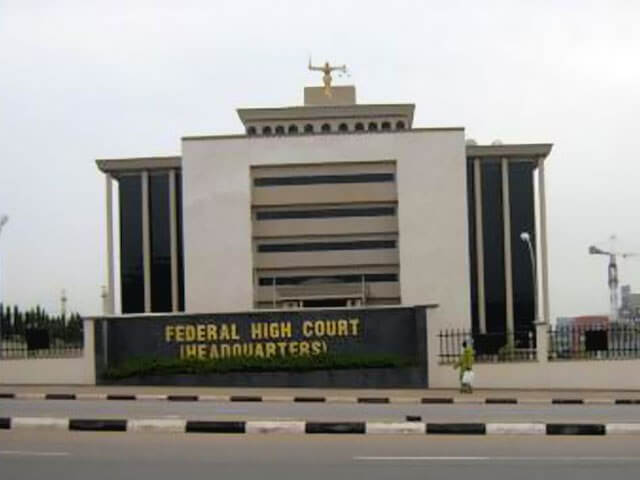
A Federal High Court in Abuja on Tuesday gave a contrary verdict on whether Nigeria’s electoral umpire, the Independent National Electoral Commission, (INEC) has the constitutional authority to fix timelines within which political parties must conduct their primaries ahead of the 2027 general elections.
Newsmata.com.ng reports that Justice Mohammed Umar had last Wednesday nullified INEC’s guidelines, holding that it cannot lawfully shorten the timeline provided under Section 29(1) of the Electoral Act 2026 for submission of candidates’ particulars and party records, a judgement many legal experts had hailed and the opposition celebrated for giving them respite and rescuing them from being trapped in a political party that they are no longer comfortable in.
The INEC has however appealed the judgement which nullified parts of its election guidelines. In an appeal filed by its counsel through its counsel, Alex Izinyon, senior advocate of Nigeria, SAN, INEC is also seeking an order of stay of the execution of the judgement pending the determination of its appeal.
The electoral umpire is said to be challenging Umar’s judgement on nine grounds notably that its guidelines were lawfully issued to guide electoral preparations and ensure compliance with constitutional and statutory requirements.
However in another ruling on Tuesday, delivered by Justice James Kolawole Omotosho in Suit No: FHC/ABJ/CS/720/2026 filed by the Social Democratic Party, on the same issue, the court held that INEC is empowered under the Constitution and the Electoral Act 2026 to issue election timetables that include deadlines for political party primaries and related preparatory activities.
Justice Omotosho however emphasised that while INEC can set such timelines, it cannot shorten statutory deadlines provided under the law, particularly those relating to candidate submissions and substitutions.
According to the judge, “This honourable court hereby declares that Election Timetable is a chain of events or actions which include submission of membership register of political parties to be used for the purpose of primaries and fix timeframes within which political parties are to organize their primary Elections for the purpose of the stated 2027 Election.”
Further holding that INEC is constitutionally empowered to issue and modify election timetables where necessary, Omotosho said, “This honourable court hereby declares that the Independent National Electoral Commission is empowered by the Constitution of the Federal Republic of Nigeria, 1999 (as amended) and the Electoral Act, 2026 to issue timetable for elections and to even alter same as it deems fit.”
The court also affirmed that requesting membership registers from political parties and setting deadlines for primaries were within INEC’s legal powers.
“This honourable court hereby declares that the Defendant requesting for membership register of Political parties and giving timeframe within which to conduct primaries is not ultra vires the powers of the Defendant,” Justice Omotosho ruled.
However, the court restricted INEC from shortening statutory timelines, holding that the commission cannot override provisions of the Electoral Act 2026 relating to candidate submissions and substitutions.
The parallel ruling, political watchers fear, may have further brought uncertainty into the polity with the parties confused about whether or not the window for defection is still open and if they can still update their registers amid defections by some aspirants having earlier met the May 10 deadline for submission of party registers.
The initial case was instituted by the Youth Party, which argued that INEC exceeded its powers under the Electoral Act 2026.
But disagreeing with the judgement therefrom, INEC, in a motion on notice filed alongside its appeal dated May 25, 2026, prayed the Court of Appeal in Abuja to set aside the decision of the lower court.