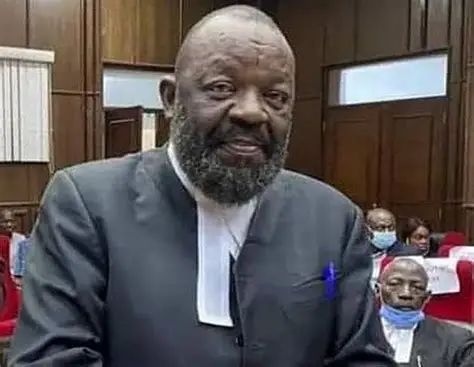
As controversies trail the launch of the memoir of former military head of state General Yakubu Gowon, Barrister Aloy Ejimakor, the Special Counsel to the imprisoned leader of the Indigenous People of Biafra (IPOB), Nnamdi Kanu, has faulted his account of the Nigerian Civil War, accusing him of deliberately lying and distorting the history of the war to conceal his alleged betrayal of the Aburi Accord and his role in deepening Nigeria’s ethnic divisions.
Reacting to the book in a statement he posted on X (formerly Twitter) on Thursday in which Gowon reportedly blamed late Biafran leader, Dim Chukwuemeka Odumegwu Ojukwu, for frustrating efforts to prevent the civil war, Ejimakor said, “The publication of Yakubu Gowon’s memoir has predictably reignited debates over the Nigerian Civil War.”
He said, “By claiming that Odumegwu Ojukwu “deliberately and effectively thwarted every effort” at peace, Gowon presented a false history, adding that “While Ojukwu had adopted a principled posture, laying the blame entirely at his feet conveniently obscures Gowon’s own pivotal failures, most notably, his betrayal of the Aburi Accord and the execution of a war that left Nigeria profoundly fractured.”
The lawyer contended that the Nigerian government under Gowon sabotaged the best opportunity for a peaceful resolution to the crisis that engulfed Nigeria before the declaration of Biafra.
According to him, “To be sure, Gowon’s narrative minimises the reality that the federal government structurally sabotaged the best chance for a peaceful resolution,” he stated.
“In January 1967, both leaders met in Aburi, Ghana, agreeing to a loose confederation to de-escalate tensions following the horrific 1966 anti-Igbo pogroms.”
Contending that the agreement reached during the Aburi meeting was later undermined after Gowon returned to Lagos, Ejimako asserted that “Upon returning to Lagos, Gowon succumbed to pressure from federal civil servants and British diplomats who feared a loss of central power.
“Gowon unilaterally issued Decree No. 8, which stripped the core elements of the Aburi agreement.
“By reneging on this signed framework, Gowon destroyed political trust, leaving the Eastern Region isolated and handing Ojukwu the political capital to declare secession in good faith.”
He further carpeted Gowon’s regime of implementing post-war policies that entrenched feelings of marginalisation among the Igbo people despite the official “No Victor, No Vanquished” declaration that followed the war.
“So, while Gowon successfully preserved Nigeria’s geographic borders by force, his administration failed to foster emotional or structural integration.
“Post-war economic policies, such as the controversial £20 flat payout given to Biafran bank depositors regardless of their pre-war savings, deeply alienated the Igbo population, institutionalising a sense of marginalization,” the lawyer stated.
Ejimakor argued that the continued agitation for Biafra and recurring ethnic tensions across Nigeria were evidence that the root causes of the conflict were never addressed, adding that “By prioritising a military victory over a genuine political settlement, Gowon presided over a forced amalgamation.
“The persistent ethnic tensions and neo-Biafran agitations that convulse Nigeria today serve as living proof that the underlying structural defects of the federation were never resolved.”
Dismissing Gowon’s memoir as more about self-preservation than historical truth, Ejimakor submitted that “All in all, Gowon’s memoir reads less like an objective historical record and more like an effort to absolve his administration of its broken promises and strategic blunders,“ concluding that “By placing the entire burden of failure on Ojukwu, Gowon dodges accountability for a war that saved the map but fractured the soul of Nigeria forever.”