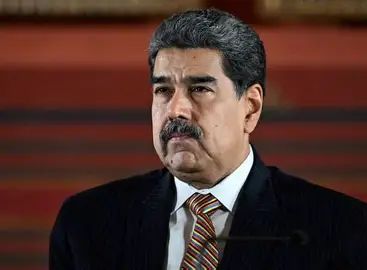
A federal court in the Southern District of New York court on Thursday reserved ruling to a later date whether the embattled ousted Venezuelan President Nicolas Maduro and his wife Cillia Flores should have access to the country’s treasury to fund their trial.
Since they were captured by US forces January 3, 2026, the couple has spent more than 80 days in separate units at Brooklyn’s Metropolitan Detention Center, a federal jail that has detained other high-profile inmates including Jeffrey Epstein and his accomplice Ghislaine Maxwell, as well as hip-hop’s Sean “Diddy” Combs.
Maduro and Flores’s attorneys had asked the judge to dismiss the narco-terrorism case against them because the US government denied them use of the funds for their lawyers due to current sanctions, a request the prosecutors opposed arguing that Maduro “plundered” Venezuela’s wealth and should not be able to use that country’s money for legal fees.
But an apparently sympathetic 92-year-old Judge Alvin Hellerstein in reserving his ruling on the issue, noted that “the right to defense is paramount”.
Hellerstein however said he would not grant the defence’s bid to dismiss the overall case over the fees dispute.
Maduro and Flores were seized by US forces from his compound in Caracas in a dramatic night-time raid in January and were brought to New York to face allegations of weapon and drug offences, which they deny.
Because the Maduros and the Venezuelan government are subject to US sanctions, they needed to obtain a licence allowing the government to pay their legal fees.
The US Government Office of Foreign Assets Control initially granted that licence and then revoked it.
Prosecutors argued that the Maduros should not be able to access Venezuelan government funds over “national security” concerns and “foreign policy” reasons and claim they have access to personal funds to pay for attorneys.
Under US law, every defendant is entitled to a court-appointed lawyer if they are unable to afford a private one.
Thursday marked the second court appearance for Maduro and Flores. During their initial arraignment in January, Maduro had an outburst in court, telling reporters and members of the public that he was innocent and had been kidnapped by the US government.
In a 25-page indictment, US prosecutors laid out a case that began in 1999, when Maduro was first elected to public office, alleging Maduro, Flores, his son Nicolás Ernesto Maduro Guerra, and three others participated in a “relentless campaign of cocaine trafficking”.
The US has accused Maduro of narco-terrorism conspiracy, cocaine importation conspiracy, possession of machine guns and destructive devices and conspiracy to possess machine guns and destructive devices.
Maduro and his wife have yet to make an application for bail and have been held in a Brooklyn’s federal Metropolitan Detention Center.
No trial date has been set.
Since Maduro’s arrest, former Vice-President Delcy Rodríguez has taken power and the country said it has resumed diplomatic ties with the US.
Residents of Caracas, Venezuela’s capital, told the BBC they would be watching developments in court closely.
Opponents of his government say they hope he “never returns” to Venezuela and that he pays “for all his crimes”, while his supporters hope he will be released.
Ana Patricia, a 72-year-old retired lawyer, told the BBC that despite government censorship, everyone is trying to follow the process.
“They can control what Venezuelan media publish, but not what is published in the international press.”
Regarding Maduro’s fate, she said she felt a degree of sympathy: “He is a man who had everything but lost it through greed and an inflated ego. I feel sorry for him, because in the end he is a human being, but I hope he receives a life sentence. He has to pay for his crimes.”
Adriana, a 35-year-old nurse from La Guaira, just north of Caracas, also said she believes he should face life in prison — “or at the very least, 30 years”.
“I hope he is held accountable for the damage he has done to Venezuela, and not just him. I hope the other politicians who stood alongside him, and who are also accused of drug trafficking, are jailed as well”, she adds.
In western Caracas, Agustina Parra, a 67-year-old retired nurse, told the BBC that she has faith that “my President Maduro will be released”.
“Despite his flaws, he has not been a bad president. He knows he is innocent and he will prove it.”
Parra claims that the US government “doesn’t even know what to accuse him of”: “They accuse him of drug trafficking, of weapons possession… And I cannot accept the actions of President Trump in Venezuela, in which so many people died.”