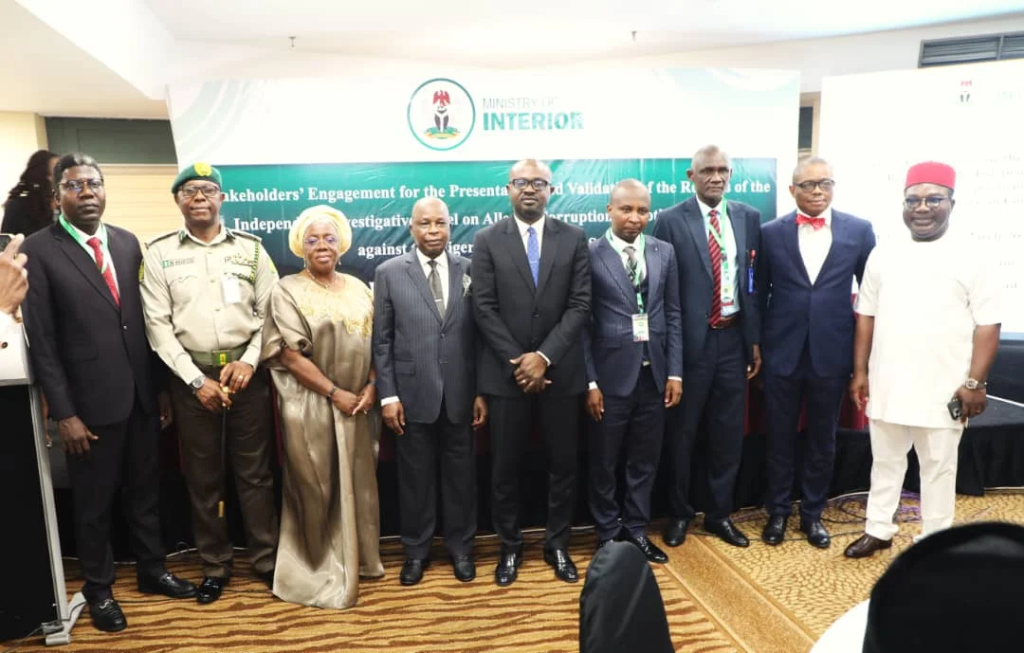
An Independent Investigative Panel on alleged corruption and other violations against the Nigeria Correctional Service (NCoS) in the prison scandal involving Nigerian transgender influencer Idris Olarenwaju, popularly known as, ‘Bobrisky’, has revealed systemic challenges such as corruption, operational inefficiencies, human rights concerns, among others, that required urgent attention.
Newsmata.com.ng reports that the panel was set up in the aftermath of Bobrisky’s imprisonment scandal. The controversial crossdresser had been sentenced to six months in jail for abusing the Naira at a film premier in April 2024 and was discovered to have lived in a flat outside the prison and received other special privileges.
Bobrisky was allegedly allowed frequent visits from family and friends, had a furnished single cell, a humidifier, access to television, a fridge and even a phone.
Speaking at the beginning of the presentation of the panel’s findings on Tuesday at the opening of a two-day stakeholders’ engagement in Abuja, the Minister of Interior, Dr Olubunmi Tunji-Ojo, confirmed that implicated officers, including an Assistant Controller General, have been dismissed from service, adding that other officers found culpable would face appropriate disciplinary and legal consequences in line with existing laws and regulations.
The minister said the panel, inaugurated November 24, 2024, conducted a 16-month investigation involving extensive consultations and analysis to expose systemic weaknesses within the service.
Tunji-Ojo appreciated members of the panel for their dedication, professionalism and diligence in carrying out the sensitive assignment of investigating the allegations of corruption, abuse of power, torture, cruelty, inhumane and degrading treatment within NCoS facilities.
He explained that the panel was constituted in response to serious allegations of misconduct and violations within correctional institutions, following the arrest of Idris Olarenwaju, popularly known as, ‘Bobrisky’.
Highlighting the said systemic challenges which, he noted, required urgent attention, the minister said these included issues relating to “corruption, operational inefficiencies, poor welfare conditions, human rights concerns and institutional gaps that must be addressed through comprehensive reforms”.
He emphasised that the stakeholders’ meeting was not a ceremonial presentation of a report but an opportunity for collective reflection and constructive dialogue among critical stakeholders.
Noting that effective collaboration among stakeholders remained essential for sustainable reform of Nigeria’s correctional system, Tunji-Ojo posited that “Your insights, recommendations and support will help guide the implementation of the panel’s findings and ensure that the necessary reforms are both practical and impactful”.
The minister said that reformation of correctional centres was not solely about sanctions, but strengthening institutions, operational standards, enhancing training and welfare for correctional officers.
He said that it was important to ensure that correctional facilities aligned with international best practices with the aim of promoting justice and restoring hope, while supporting the rehabilitation and reintegration of offenders into the society as responsible citizens.
The minister reiterated the Federal Government’s unwavering commitment to a zero-tolerance policy on corruption, abuse of power and any form of human rights violations within the NCoS.
In his remarks, the Attorney-General of the Federation and Minister of Justice (AGF), Lateef Fagbemi, commended Tunji-Ojo for facilitating the process.
Fagbemi said that the engagement was timely and significant, as NCoS occupied a vital space in the administration of criminal justice.
“This institution is the heartbeat of rehabilitation, reformation and reintegration, therefore, any shadow of corruption or abuse of power within its walls strikes at the very core of our social contract.
“Public institutions must continually earn the trust of the citizens. So, the presentation of this report is not merely an administrative milestone but a bold step toward reinforcing the integrity of our justice sector.
“It reflects our collective resolve to identify systemic gaps with honesty and to pursue a practical, high-impact solution necessary to restore professionalism and human dignity to our correctional framework,” the AGF said.
He further said that the repeal of the Nigerian Prisons Act and the subsequent re-enactment of the Nigerian Correctional Service Act 2019 must direct legislative response to the systemic challenges.
He explained that “It is this legislative framework that empowers us to move beyond the findings of this report towards, a correctional system that is transparent, accountable, and fully align with international human rights standards”.
Fagbemi assured Tunji-Ojo of his continued support for constructive efforts aimed at deepening public confidence and promoting a justice system that reflected the principles of fairness, accountability and human rights.
Also speaking, the NCoS Controller-General (CG), Sylvester Nwakuche, said the establishment of the panel was not for condemnation but accountability.
According to him, “We have not come here to trade in defensiveness or denial but to listen, understand, reflect and commit.
“The findings of this panel, even if they are difficult to confront, must be confronted; not because the service is defined by its failures, but because it must be measured by its response to them.
“I also want to say this plainly that the majority of our officers serve with professionalism, dedication and quiet sacrifice often in conditions that are far from ideal”.
The NCoS CG, however, pleaded that the misdeeds of some personnel must not be permitted to eclipse the honour of the many who were diligent in service to the nation.
The engagement brought together key stakeholders, including the Nigerian Bar Association President, Afam Osigwe; Controller-General of NCoS, Sylvester Nwakuche; representatives of UNICEF; the National Human Rights Commission; the Legal Aid Council; as well as state Attorneys-General.