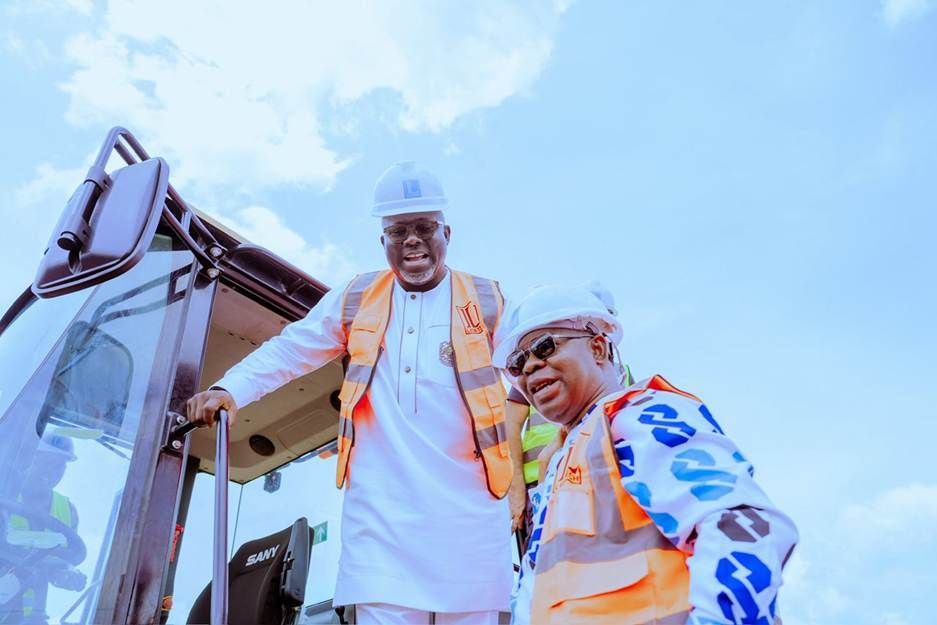
The Ndokwa nation in Delta State comprising Ndokwa East, Ndokwa West, and Ukwuani Local Government Areas, on Wednesday expressed deep gratitude to Governor Sheriff Oborevwori, for the flag-off of the construction of the N29.8 billion Aboh-Akarai Road and Bridge with the deputy governor, Monday Onyeme noting that when completed, the Akarai community would be witnessing a tarred road for the first time in its history, a development they had considered impossible.
Describing the governor as “a builder of bridges of possibility, progress, and development,” the deputy governor noted that communities that had never experienced meaningful road infrastructure were now being connected to the rest of the state under the Oborevwori administration.
Listing several other ongoing and newly approved road projects across Ndokwa nation, including the Emu-Ebendo to Ashaka Road, Ase to Umu-Ase Road, Eweshi to Otokutu road, Ndemili to Utagba-Uno Road, and the Amai-Aragba Road project, which he described as “transformational interventions” capable of opening up neglected communities for development and economic prosperity, Onyeme thanked Governor Oborevwori for what he acknowledged as unprecedented love and commitment to the development of Ndokwa nation.
According to the deputy governor, “The vision that I once brought before you has today become a reality. On behalf of the entire Ndokwa nation — Ndokwa East, Ndokwa West, and Ukwuani Local Government Areas, we say a very big thank you.”
Onyeme therefore assured the governor of massive votes from Ndokwa nation in the forthcoming election in appreciation of the developmental strides recorded across the area.
Earlier while performing the ground-breaking ceremony, Governor Oborevwori reaffirmed his administration’s commitment to inclusive infrastructure development across the riverine, rural, and urban communities in the state.
The governor said his administration had remained focused and organised in executing its infrastructure development agenda with deliberate efforts aimed at connecting communities through reliable and resilient road networks capable of driving growth, economic renewal, and improved quality of life.
Oborevwori stated that the landmark project underscored his administration’s resolve to ensure that no part of Delta State was left behind in the delivery of democratic dividends, regardless of the terrain or remoteness of the communities.
He said: “This particular project came to my attention after the Deputy Governor attended a burial ceremony in Akarai. It took him several hours to access the community, and upon his return, he appealed passionately for the approval of this road project. He told me that approving the road would mean touching lives in the rural communities, and I immediately assured him that the project would be done. Today, that promise has become a reality”.
Oborevwori disclosed that the 11-kilometre road project, stretching from Aboh through Umuti to Akarai-Obodo and Akarai-Etiti, was designed with reinforced concrete pavement due to the swampy nature of the terrain, noting that asphalt would not withstand the environmental conditions.
He explained that the challenging terrain included thick mangrove forests, deep swamps, low-lying sections, and heavy clay deposits, but assured residents that the project represented government’s determination to overcome developmental barriers.
The governor further revealed that the project would feature continuous reinforced concrete pavement, concrete drains, culverts of varying sizes, and a 140-metre multi-span bridge across the Okiri River.
He noted that the road had been intentionally designed above the flood levels recorded during the devastating 2012 flood disaster to ensure year-round accessibility even during future flooding.
Describing the project as more than “bricks and mortar,” Oborevwori said the road would stimulate economic growth, attract investments, create employment opportunities, and facilitate the movement of agricultural produce and goods from rural communities to markets.
“For many years, residents of these communities have depended largely on river transportation. But with the completion of this road, things will change for the better. Movement will become easier, farmers will transport their produce to markets faster, students will gain easier access to schools, patients will reach hospitals without stress, and families will remain connected even during the rainy season,” he said.
The governor disclosed that the contractor handling the project had already been mobilised to site with a 40 percent advance payment amounting to N11.9 billion, expressing confidence that the project would be completed within the stipulated 12-month timeline.
He also announced that the next groundbreaking ceremony by his administration would be for the 10-kilometre Ojobo-Torugbene Road in Burutu Local Government Area, valued at N32.8 billion.
Oborevwori called on community leaders, youths, and residents of the area to cooperate fully with the contractor to ensure smooth and unhindered execution of the project.
In his remarks, the Commissioner for Works (Highways and Urban Roads), Reuben Izeze, said Governor Oborevwori had continued to confound critics with bold infrastructural projects running into several billions of naira across the state.
In his welcome address, the Chairman of Ndokwa East local government council, Vincent Oshilonya, said; “our people have suffered for many years because of poor access roads. This project will ease transportation, improve commerce, and create opportunities for families, farmers, workers, and business owners”.
Also speaking at the ceremony, President-General of Ndokwa Neku Union, Amaechi Asugwuni, alongside Mary Chidi, Godswill Obielum, and the Obi of Aboh Kingdom, HRM Greg Oputa III, commended Governor Oborevwori for appointing a son of Ndokwa nation as Commissioner for Energy at a time the people were advocating improved power supply and infrastructure development across the region.