Russian President Vladimir Putin is set to meet US envoy Steve Witkoff in Moscow on Tuesday to discuss the Trump administration’s contentious proposal to end the war in Ukraine.
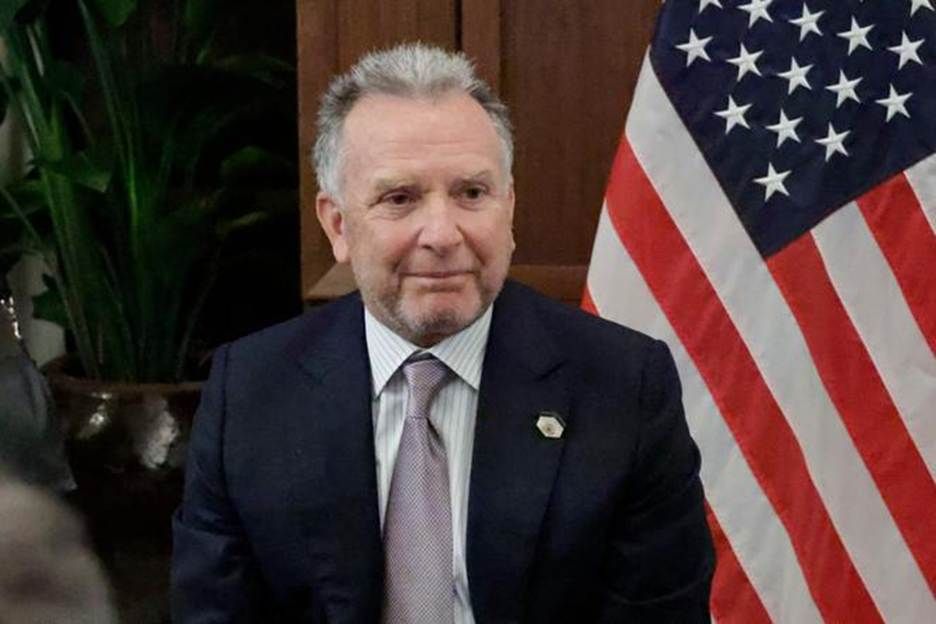
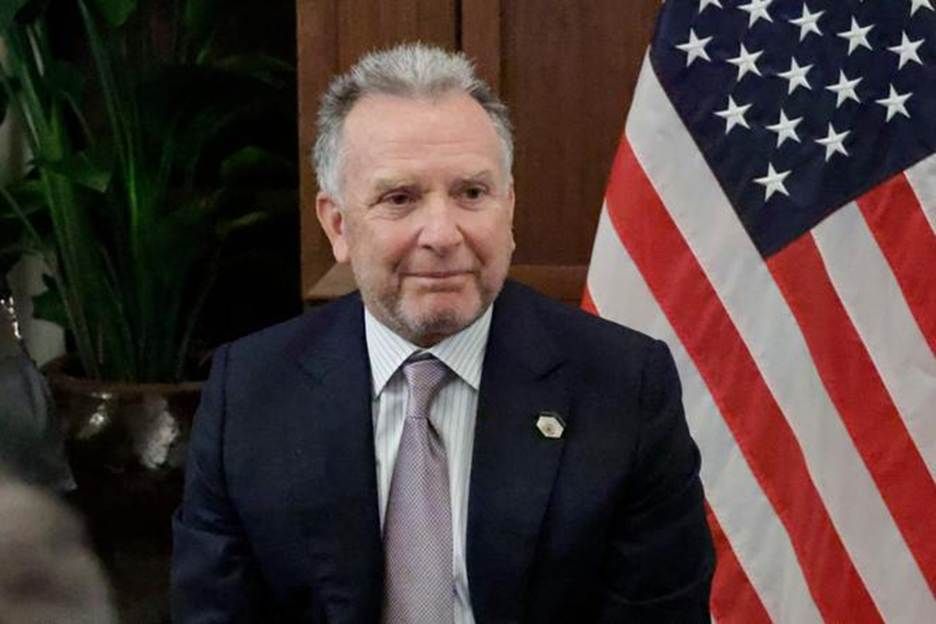
Special Envoy Steve Witkoff attends a meeting with Ukrainian officials Sunday, November 30, 2025, in Hallandale Beach, Florida. TERRY RENNA / AP
US envoy Steve Witkoff and Russian President Vladimir Putin are expected to hold talks in Moscow on Tuesday, December 2, to discuss the Trump administration’s controversial proposal to end the war in Ukraine. The meeting comes after Washington said it was feeling confident about the plan, following talks with Ukrainian negotiators in Florida. “I think the administration feels very optimistic,” White House Press Secretary Karoline Leavitt told reporters on Monday.
Meanwhile, Ukrainian President Volodymyr Zelenskyy was seeking support from European allies, who fear that the US plan – drafted without input from Kyiv or Europe – reads like a wishlist for Moscow. But Ukraine’s negotiator Rustem Umerov said “significant progress” had been achieved in the Florida talks, even though more work was needed on “challenging” issues.
Zelenskyy arrived in Ireland Monday night for an in-person briefing from Umerov after talks in Paris with President Emmanuel Macron. He was greeted on the tarmac by Prime Minister Micheal Martin, who posted on social media, “Our support for the people of Ukraine as they defend their freedom and democracy remains unwavering.”
More than three-and-a-half years into Russia’s large-scale offensive in Ukraine, an AFP analysis of data from the US-based Institute for the Study of War (ISW) showed that the Russian army last month made its biggest advance in Ukraine since November 2024.
The situation for Kyiv has been further complicated by a corruption scandal that has rocked Zelenskyy’s inner circle and forced the dismissal last week of his top negotiator and chief of staff, Andriy Yermak. “We are expecting a conversation with the president of the United States on key issues that are quite challenging,” Zelenskyy said in Paris.
He said Russia had stepped up missile and drone strikes on his country to “break” the will of Ukrainians. “This is serious pressure, not only psychological but also physical pressure on our population,” Zelenskyy said.
Macron said the current moment “could be decisive for the future of peace in Ukraine and security in Europe.” Zelenskyy insisted Russia should not receive any concession that “it could consider as a reward for this war.” “The aggressor must pay for the aggression,” he said.
Zelenskyy and Macron spoke by telephone to Witkoff and Umerov in Florida, the Elysee Palace said, while Zelenskyy’s talks in Paris also included phone conversations with other European leaders, including British Prime Minister Keir Starmer.
The flurry of communication continued with a call between Macron and Trump later Monday in which they discussed “next steps in the mediation efforts” and the French president “particularly emphasized the central importance of security guarantees necessary for Ukraine,” according to the Elysée.
Washington’s initial 28-point proposal to halt the war would have seen Kyiv withdraw from territory it still controls in its eastern Donetsk region and the United States de facto recognize the Donetsk, Crimea and Lugansk regions as Russian. After talks in Geneva, the United States updated the original blueprint, but the current contents remain unclear.
EU foreign policy chief Kaja Kallas expressed concern over the planned Putin-Witkoff meeting, saying she feared “all the pressure will be put on the weaker side, because that is the easier way to stop this war when Ukraine surrenders.”
Macron emphasized that “there is currently no finalized plan on the territorial issues, strictly speaking. It can only be finalized by President Zelenskyy.” He also hailed new US sanctions on the Russian energy industry as a “game changer,” saying that in the next weeks he expected pressure on the sector to be “the highest since the beginning of the war.”
The diplomatic push comes as the war – which has killed tens of thousands of civilians and military personnel and displaced millions of Ukrainians – shows no sign of easing. Russia claimed on Monday to have captured Pokrovsk, a key logistics hub that Ukraine had been defending.
A Russian missile attack killed four people and wounded nearly two dozen others on Monday in the central Ukrainian city of Dnipro, the regional governor said. By the end of November, the Russian army controlled, fully or partially, 19.3% of Ukrainian territory, according to the analysis of data from the ISW, which works with the Critical Threats Project.
Le Monde with AFP