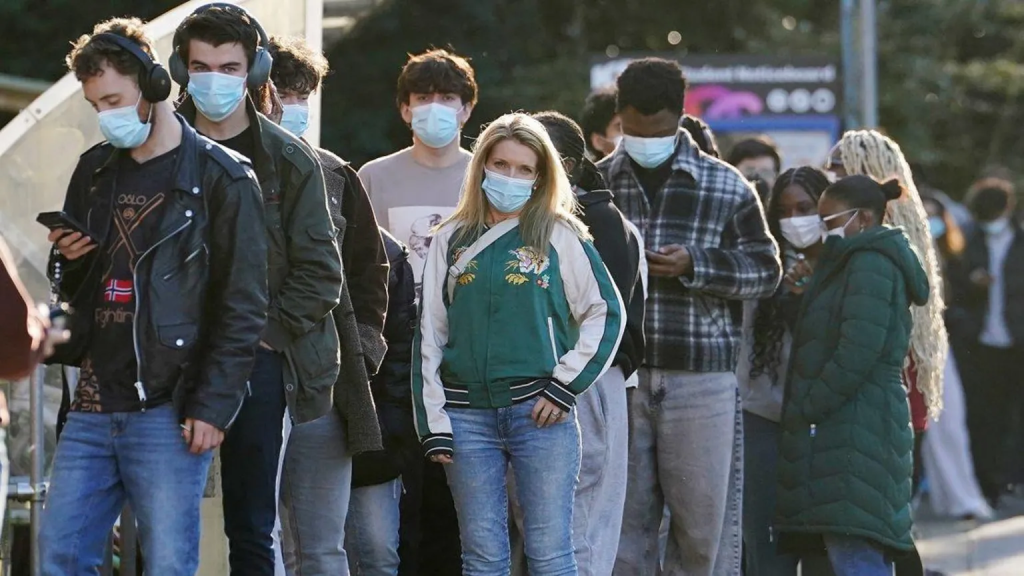
Thousands of students are being offered jabs at the University of Kent
An urgent public health alert has been issued after a deadly meningitis outbreak in Kent, with health workers across England urged to look out for signs of infection.
The UK Health Security Agency (UKHSA) issued the alert as a vaccination programme targeting about 5,000 students began at the University of Kent, following an outbreak thought to have originated at a nightclub in Canterbury.
A 21-year-old university student and Juliette, a sixth former at Queen Elizabeth’s Grammar School in Faversham, have died, with the number of confirmed and suspected cases now at 20.
The UKHSA alert is unusual but has been used in recent years for MPox and other public health issues.
UKHSA chief executive Susan Hopkins told the BBC that it was trying to work out why the infection had spread so fast in Canterbury.
She said vaccines held by the government would be used for NHS patients, including students in Kent, but it would not rule out supplying some to pharmacies.
A case has also now been confirmed at Canterbury Christ Church University.
Christ Church student Tyra Skinner, 20, contracted meningitis after attending the Club Chemistry nightclub, her parents said.
Family
Tyra Skinner is in hospital and in a stable condition after falling ill with meningitis
The family has taken antibiotics and Tyra is in a stable condition at the William Harvey Hospital, Ashford.
Her mother, Candice Skinner, said: “We just thought she was getting flu symptoms.
“She started developing a red eye over the weekend and I thought she had pink eye, and then on Monday she was really, really ill, slumped over, no energy, so we took her to hospital.”

Candice Skinner said her daughter had flu symptoms before becoming “really ill” with meningitis
The UKHSA said about 2,500 doses of antibiotics had been administered across Kent.
GPs across the country have been told to prescribe antibiotics to anyone who visited the nightclub from 5 to 7 March, plus students from the University of Kent.
The UKHSA said antibiotics remained the most effective treatment.
Health chiefs have described the “explosive nature” of the outbreak as unprecedented.
Hopkins previously said it looked as though there had been a super spreader event, with the outbreak ongoing within university halls of residences, but that she could not yet confirm where the initial infection came from. BBC