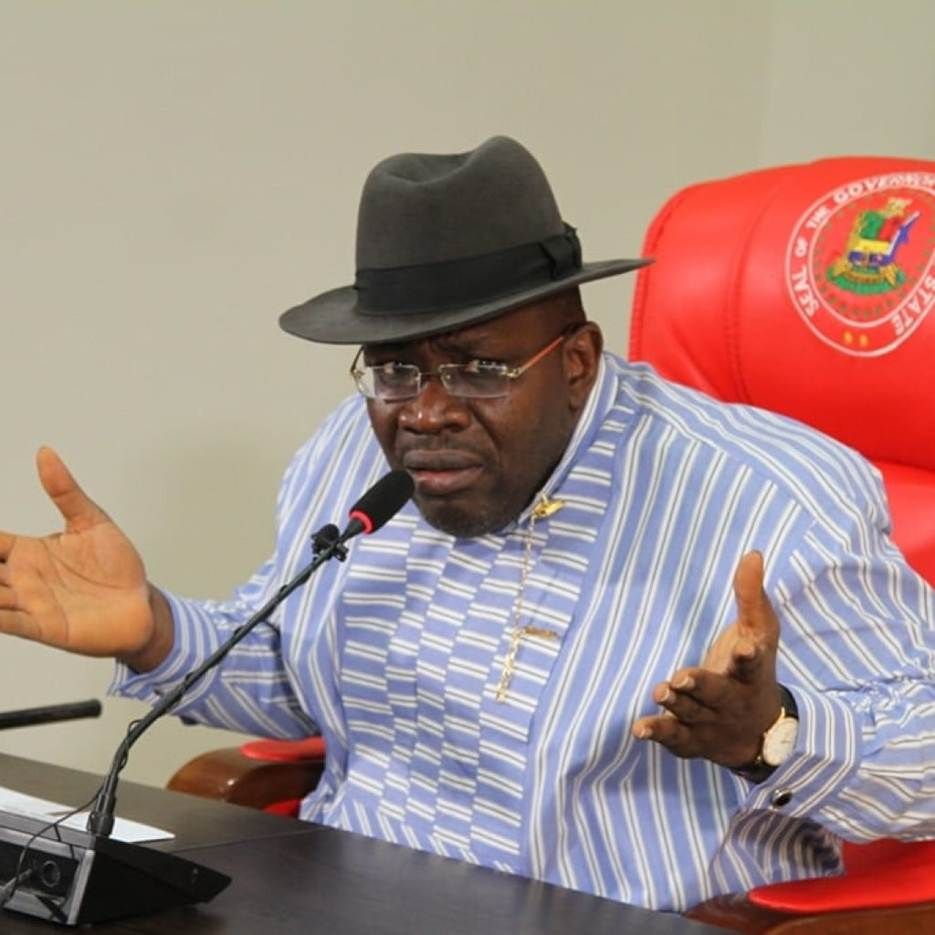
A distraught Senator Seriake Dickson representing Bayelsa West senatorial district has expressed his misgivings over the Electoral Act, 2022 (Repeal and Re-Enactment) Bill 2026, passed by the National Assembly on Tuesday and signed into law with utmost despatch on Wednesday by President Bola Tinubu barely 24 hours after amid widespread outrage over a proviso that gives the Independent National Electoral Commission (INEC) discretionary power to transmit election results manually where electronic transmission failed.
Senator Dickson, who had been vociferous in advocating for real time electronic transmission of results accused the majority members of the Senate of being “bent on undermining electoral transparency”.
In a statement on Wednesday, Dickson, who voted against the controversial clause, argued that it could weaken the mandatory real-time electronic transmission of election results from polling units across Nigeria.
He also feared that it could be misapplied to dilute the gains made in strengthening the electoral process.
The former Bayelsa State governor said, “Yesterday, at the Senate plenary, I voted NO to the proviso that has the capacity of whittling down the mandatory electronic transmission of election results from the polling units in Form EC8A.
“As I have explained severally, this proviso adds nothing to the law but has the capacity to be misused, misunderstood, and used to undermine electoral integrity and transparency.”
Contending that INEC had already demonstrated the technical capacity to electronically transmit results in the vast majority of polling units nationwide, Dickson said, “My view is that INEC has already explained that it has the capacity to transmit election results in over 90% of polling units”, insisting that in the rare cases where electronic transmission may not be possible due to communication challenges, the electoral body should address such situations through detailed regulations rather than legislative amendments.
He therefore submitted that, “I feel it is the duty of INEC, once we make it mandatory, to come up with guidelines and regulations that will stipulate strict conditions for the few cases where presiding officers may not be able to transmit electronically as a result of communication failure; and these, from the last INEC report, cannot be more than 7%.
“My view, therefore, is that we should leave it for INEC to handle through its regulations and guidelines. The law should only make provision for mandatory electronic transmission, which we have done, and we should stop there.
“Hence, I voted yesterday, galvanised opinions, and also joined in voting NO to the inclusion of the proviso.”
While he acknowledged that the majority carried the day despite his stance to the contrary, Senator Dickson lamented that “Unfortunately, as I have said, the majority is determined to utilise its numbers, and they did so effectively.
“In a democracy, the majority has its way, but the minority will have its say. I believe that the majority should be used for the national good and not otherwise.”
He however admonished INEC and the judiciary to safeguard the integrity of the electoral process, stating that “It is now left for INEC to stipulate strict conditions for the admission of election results not transmitted electronically.
“It is also for the courts to bear in mind the general good when interpreting this section to promote electoral integrity and transparency.”
Calling on Nigerians to remain vigilant, Dickson said, “As I have said, the citizens must not give up. They should organise and support candidates and parties that promote and respect democratic norms and organise and mobilise against candidates and parties that do otherwise. We wish Nigeria well.”