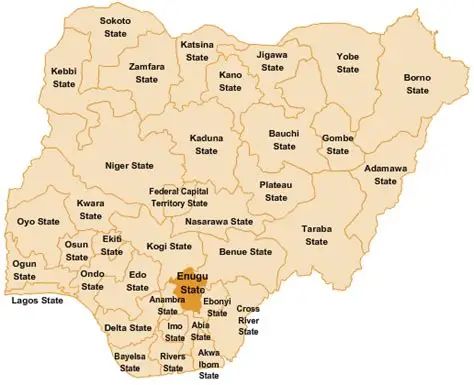
The British government has been ordered to pay £420 million to families of 21 coal miners slain in Enugu State by colonial masters for protesting harsh working conditions, racial disparities in wages and unpaid arrears of wages.
This judgement was handed down on Thursday by Justice Anthony Onovo of the Enugu High Court who ordered the British Government to pay £20 million each to the families of the 21 slain coal miners.
The coal miners had embarked on the action when their demands were not met, adopting a “go-slow” protest method and occupied the mine to prevent management from locking them out.
The British superintendent responded by opening fire on the defenceless protesters, killing 21 of them and injuring 51 others.
Newsmata.com.ng recalls that the killings took place November 18, 1949, at the Iva Valley Coal Mine in Enugu which was then the administrative capital of the Eastern Region of British-administered Nigeria at the time.
The victims were identified as: Sunday Anyasodo, Ani Oha, Andrew J. Obiekwe Okonkwo, Augustine Chiwetalu, Onoh Ugwu, Ngwu Offor, Ndunguba Eze, Okafor Agu, Livinus Ukachunwa, Jonathan Agu Ozoani, Moses Ikegbu Okoloha and Chukwu Ugwu.
Others included Thomas Chukwu, Simon Nwachukwu, Agu Alo, Ogbonnia Ani Chima, Nnaji Nwachukwu, William Nwaku, James Onoh Ekeowa, Felix Nnaji, and Ani Nwaekwe.
The suit, NO: E/909/2024 was brought by Human Rights Activist, Mazi Greg Onoh, who sought an acknowledgment of liability, a formal apology from the British Government, and comprehensive compensation for the loss of their loved ones.
The respondents were Secretary of State for Foreign, Commonwealth and Development Affairs as first respondent, British Government, 2nd, and the Federal Government of Nigeria, 3rd.
Others were the Attorney-General of the Federation and Head of Commonwealth, Government of the United Kingdom as 4th and 5th respondents respectively.
The 1st, 2nd, 5th and 6th respondents were however not represented by any counsel.
In his judgement, Justice Onovo described the massacre as unlawful and extrajudicial violation of the right to life, holding the British colonial administration liable and ordered substantial compensation, formal apologies, and diplomatic action.
The judge insisted that the British government must be held accountable and must make reparations to the families of the deceased 21 coal miners.
According to him, “This defenseless coal miners were asking for improved work conditions. They were not embarking on any violent action against the authorities, but yet were shot and killed.
“The 1st, 2nd, 5th and 6th respondents should pay £20 million per victim, totaling £420 million, payable by the British Government as effective remedy and compensation for the violations of the right to life.
“They will also pay post-judgement interest at 10 per cent per annum until fully paid, while claims for pre-judgment interest and exemplary damages is hereby refused”.
Onovo ordered that unreserved written apologies to the families via their counsel should be published in Nigeria’s Daily Sun, Daily Independent, and The Punch, as well as in three major national newspapers in the United Kingdom, recognising the historical injustice.
This, he said, must show proofs of publication filed in court within 60 days, ordering that the monetary awards would be satisfied within 90 days from the date of judgement.
The judge added that the Federal Government of Nigeria and Attorney-General had a constitutional duty under Sections 19(d) and 150(1) to pursue redress, and their prolonged inaction was held to constitute a dereliction of constitutional duty.
Onovo added that the Nigerian Government must initiate and pursue diplomatic engagement with the British side within 60 days to seek justice, effective remedies, and reparations.
He, however, dismissed a preliminary objection based on sovereign immunity and affirmed its jurisdiction, stressing that grave historical injustices remained justiciable under Nigeria’s Constitution.
“The argument by the representative of the Federal Government that Nigeria was still under colonial rule when the killing was committed is hereby struck out,” Onovo held.
Reacting to the judgement, Counsels to the applicants, Prof. Yemi Akinseye-George, senior advocate of Nigeria, (SAN) and P.N Agazie, described it as a historic judgement and an indication that governments anywhere in the world should not tolerate abuses and violations of any form, torture and taking of human lives without provocation.
According to them, the judgement drew persuasive parallels with international precedents, including the United Kingdom’s Mau Mau settlement, underscoring the continuing obligation to provide redress for serious human rights abuses.
Akinseye-George asserted that “This ruling represents a significant milestone in the pursuit of historical accountability and justice for colonial-era violations, affirming that the right to life transcends time, borders, and changes in sovereignty”.