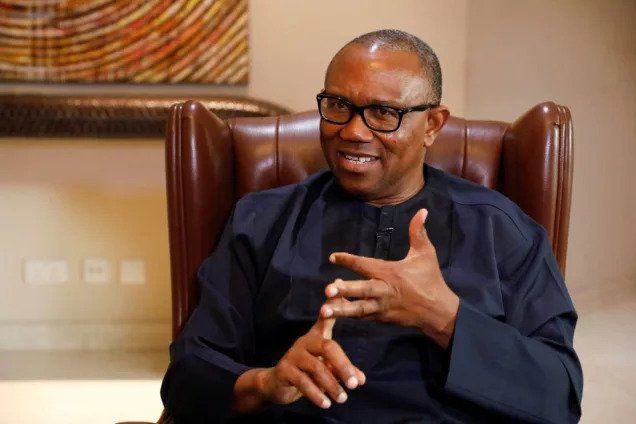
Peter Obi
Former presidential candidate of the Labour Party (LP) in the 2023 general election, Peter Obi, on Saturday mocked the President Bola Tinubu’s administration for allegedly graduating from budget padding to forging laws, following the alarm raised by a federal lawmaker that the tax law gazetted by the federal government, to take effect in January, was different from what was passed by the two chambers of the National Assembly (NASS).
Accusing the Federal Government of presiding over what he described as the forging of laws, Obi warned that the development poses a grave threat to constitutional governance and public trust.
He was particularly alarmed by the introduction of new enforcement and coercive powers that the House of Representatives never approved.
Newsmata.com.ng reports that a member of the House of Representatives, Abdulsammad Dasuki (PDP, Sokoto), on Wednesday raised a matter of privilege in the House, alleging inconsistencies between the tax laws passed by the National Assembly and the versions later gazetted and released to the public.
Citing Order Six, Rule Two of the House Rules, Dasuki informed lawmakers that his legislative privilege had been breached, contending that the gazetted versions of the laws did not faithfully represent what was debated, approved, and passed on the floor of the House.
He said that after the passage of the tax bills, he spent the last three days reviewing the gazetted copies alongside the House Votes and Proceedings, as well as the harmonised version agreed upon by both chambers of the National Assembly and discovered notable discrepancies.
“I was here, I gave my vote and it was counted, and I am seeing something completely different,” Dasuki stated, adding that he obtained copies of the gazetted laws from the Ministry of Information and found them to be inconsistent with what was approved by both the House and the Senate.
Imploring the Speaker to make certain that all important documents such as the harmonised versions, the Votes and Proceedings from both chambers, and the currently circulating gazetted copies be submitted to the Committee of the Whole for comprehensive review by the members, Dasuki warned that allowing laws that deviated from those duly passed by the National Assembly to be released to the public would undermine the legislature’s credibility and constitute a breach of constitutional provisions.
And reacting to this development in a statement titled “Migrating from Padded Budgets to Forged Laws,” posted on his X handle on Saturday, the former Anambra State governor alleged that there were documented discrepancies between laws passed by the NASS and those eventually published and enforced by the executive.
Contending that the issue goes beyond administrative error, Obi described it as a serious constitutional breach that reflected deep institutional decay.
He lamented that Nigeria had moved from an era of padded budgets to one where laws are allegedly altered, with consequences for taxpayers’ rights and access to justice.
The former presidential candidate also knocked the Presidency for its silence on the matter, more so when the allegations involved possible forgery, abuse of process and institutional sabotage.
Obi said: “Our national shame continues to unfold, evident in the decisions made by our leaders, even at the highest levels of government. This shame is highlighted by a deeply troubling—and frankly unacceptable—issue: the documented discrepancies between what the legislature passed and what was ultimately published as law by the executive.
“This is not merely an administrative oversight; it is a serious matter that strikes at the core of constitutional governance and reveals the extent of our institutional decay.
“We have transitioned from a Nigeria where budgets are padded to one where laws are forged—changes that impact taxpayers’ rights and, most importantly, access to justice.
“Even more alarming is the introduction of new enforcement and coercive powers that the House of Representatives never approved. These include an outrageous requirement for a mandatory 20% deposit before appeals can be heard in court, asset sales without judicial oversight, and the granting of arrest powers to tax authorities.
“Perhaps most disturbing is the silence of the Presidency on a matter involving allegations of forgery, institutional sabotage, and abuse of process. Who made these alterations?
“All of this must be made public. Nigerians need to understand what was signed, what was passed, and what was formally recorded. We cannot continue to ask citizens to pay more taxes while trust in governance collapses.
“We need leadership that follows due process, embraces transparency and accountability, and respects the rule of law. No nation can thrive where laws are forged and silence replaces leadership.”